
Website Development: Building a Scalable Digital Asset for Business Growth
In a competitive digital environment, a website is no longer a static presence — it is a core business asset that directly influences brand perception, customer acquisition, and revenue generation.
4/23/20261 min read
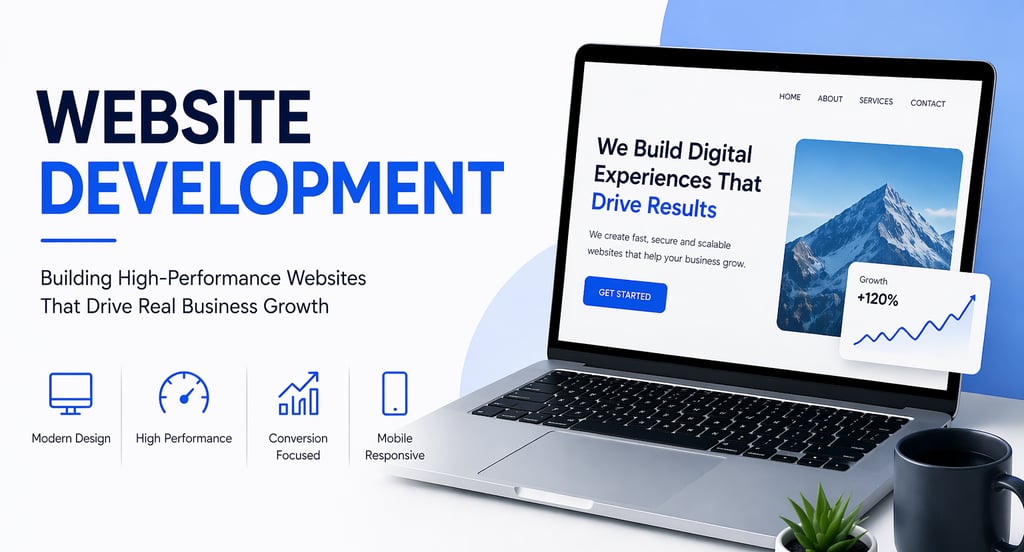
In a competitive digital environment, a website is no longer a static presence — it is a core business asset that directly influences brand perception, customer acquisition, and revenue generation.
At Gradence Global Ltd, website development is approached with a clear objective: align technology with business outcomes.
1. A Strategic Foundation, Not Just a Design Exercise
Effective website development begins with clarity on:
Business objectives
Target audience
Conversion goals
Without this foundation, even visually appealing websites fail to deliver measurable results.
A structured approach ensures that every element — from layout to navigation — serves a defined purpose.
2. Performance as a Core Priority
Website performance has a direct impact on user engagement and retention.
Key considerations include:
Page load speed
Mobile responsiveness
Technical optimisation
Stability under traffic
A delay of even a few seconds can significantly reduce user interaction and conversions.
3. Conversion-Focused Architecture
A high-performing website is designed to guide users towards action.
This requires:
Clear information hierarchy
Logical user flow
Strong call-to-action placement
Frictionless interaction
The objective is to move users efficiently from interest to decision.
4. Integration with Business Systems
Modern websites function as part of a larger ecosystem.
They should seamlessly integrate with:
CRM platforms
Analytics tools
Marketing automation systems
This ensures data consistency and enables informed decision-making across the organisation.
5. Data-Driven Continuous Improvement
Website development does not end at launch.
Ongoing optimisation is essential and includes:
Monitoring user behaviour
Analysing conversion metrics
Testing improvements (A/B testing)
Continuous refinement ensures the website evolves alongside business needs.
6. Security and Scalability
A professional website must be built to:
Handle increasing traffic
Protect user data
Maintain reliability
Scalable architecture and strong security practices are critical for long-term sustainability.
Conclusion
A well-developed website is not simply a digital interface — it is a strategic asset that supports growth, enhances customer experience, and drives measurable outcomes.
Businesses that prioritise structured, performance-driven website development are better positioned to compete, adapt, and scale in an increasingly digital marketplace.